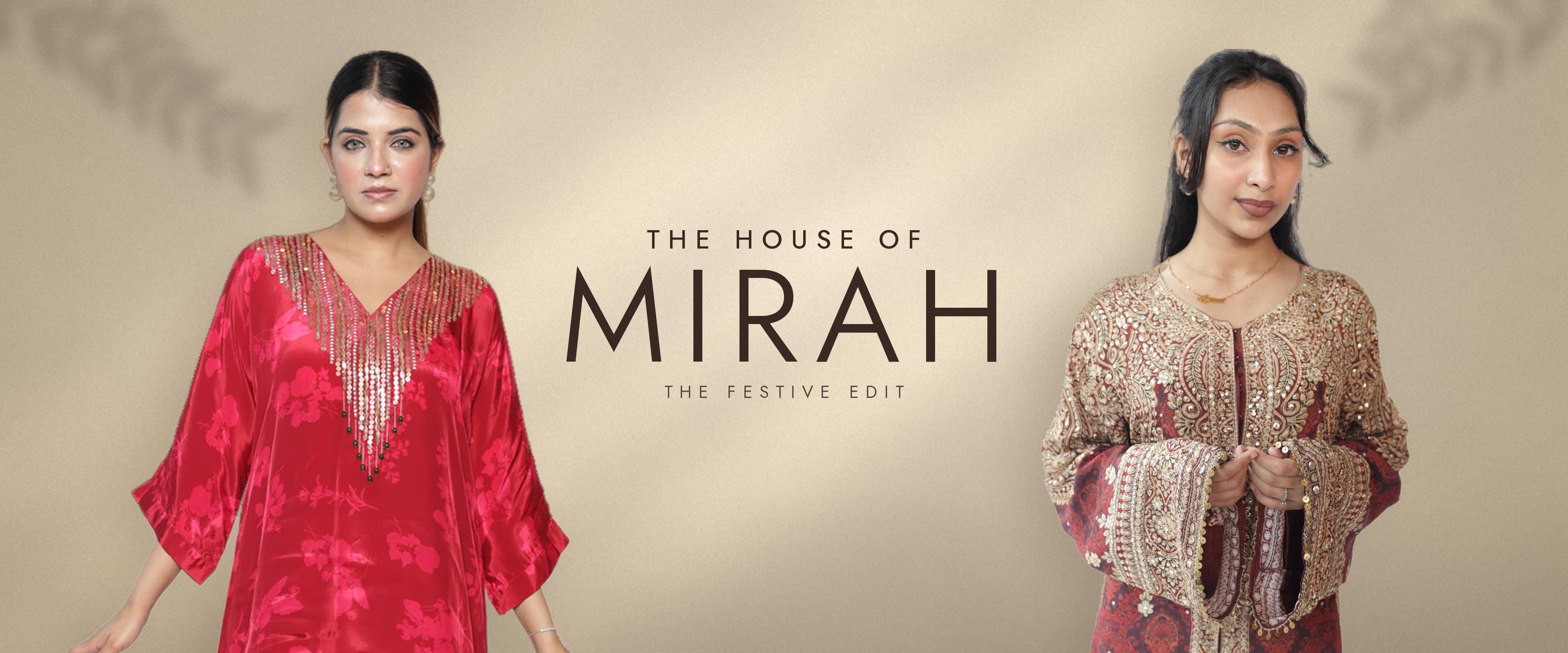
The three easiest alternatives to a lehenga are a sharara set, a floor-length embroidered gown and a heavily worked kurta set with palazzos. Each looks as dressed-up in photographs, weighs a fraction of what a lehenga does, and lets you sit comfortably through a long ceremony. Choose by the function: a sharara for the sangeet and the wedding, a gown for the reception, a worked kurta set for the ceremony itself.
Why guests skip the lehenga
A lehenga is built for the bride: layers of skirt, a can-can underneath and a dupatta that needs pinning. As a guest you are likely to attend three or four functions over two or three days, travel between venues and sit for hours, often on low seating. Sets are lighter, quicker to put on and easier to wear again — at Diwali, at the next wedding, or broken up and worn separately.
Sharara sets: the closest thing to a lehenga
A sharara is a trouser cut so wide that it falls like a skirt, so from the front it has much of a lehenga's volume without the weight. Wear it with a short kurti to show off the flare. The Anisha Sharara Set is a purple georgette kurti with an embroidered choker collar over a full floral crepe sharara, with a matching dupatta. Not sure how a sharara differs from a gharara or a farshi? See types of salwar, explained.
Embroidered gowns for the reception
Receptions are usually evening events with a more Western feel, and a floor-length gown suits them. The Zarina Embroidered Gown is maroon, worked with dense gold embroidery across the yoke and sleeves, and opens at the front over a maroon slip. It is the heaviest piece in our Festive Edit, and still far lighter to wear than a lehenga.
Worked kurta sets for the ceremony
For the wedding itself, a kurta set reads as formal when the work sits where people look: the neckline, the yoke and the cuffs. The Noor Embroidered Kurta Set carries gold embroidery across the yoke, hem and cuffs over striped palazzos. If you would rather not wear the expected colours, the Zoya Chevron Kurta Set pairs a black and cream chevron kurta with a silver-embroidered palazzo and a patchwork dupatta.
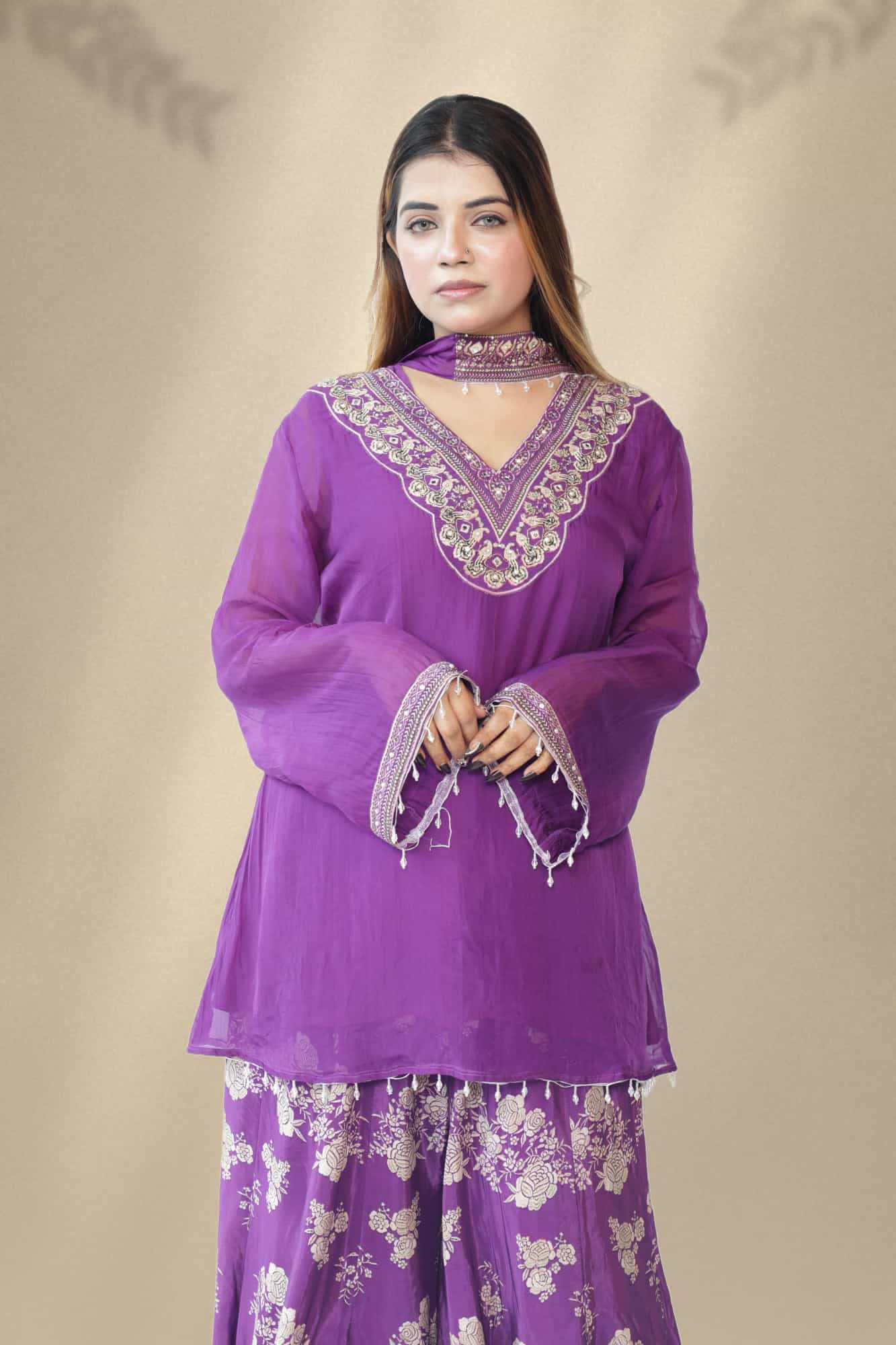
Anisha Sharara Set
₹34,000
₹23,900
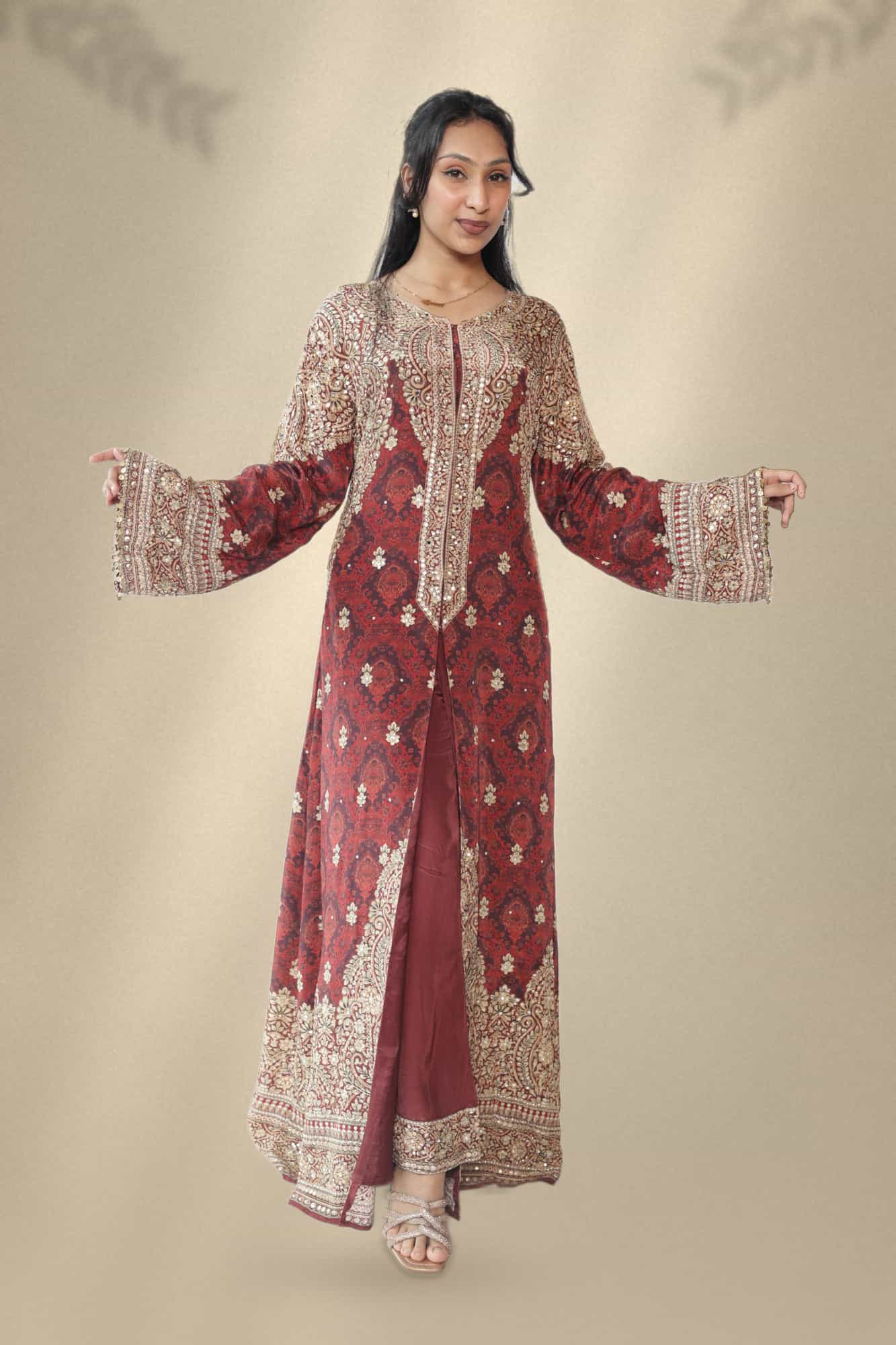
Zarina Embroidered Gown
₹34,000
₹24,900
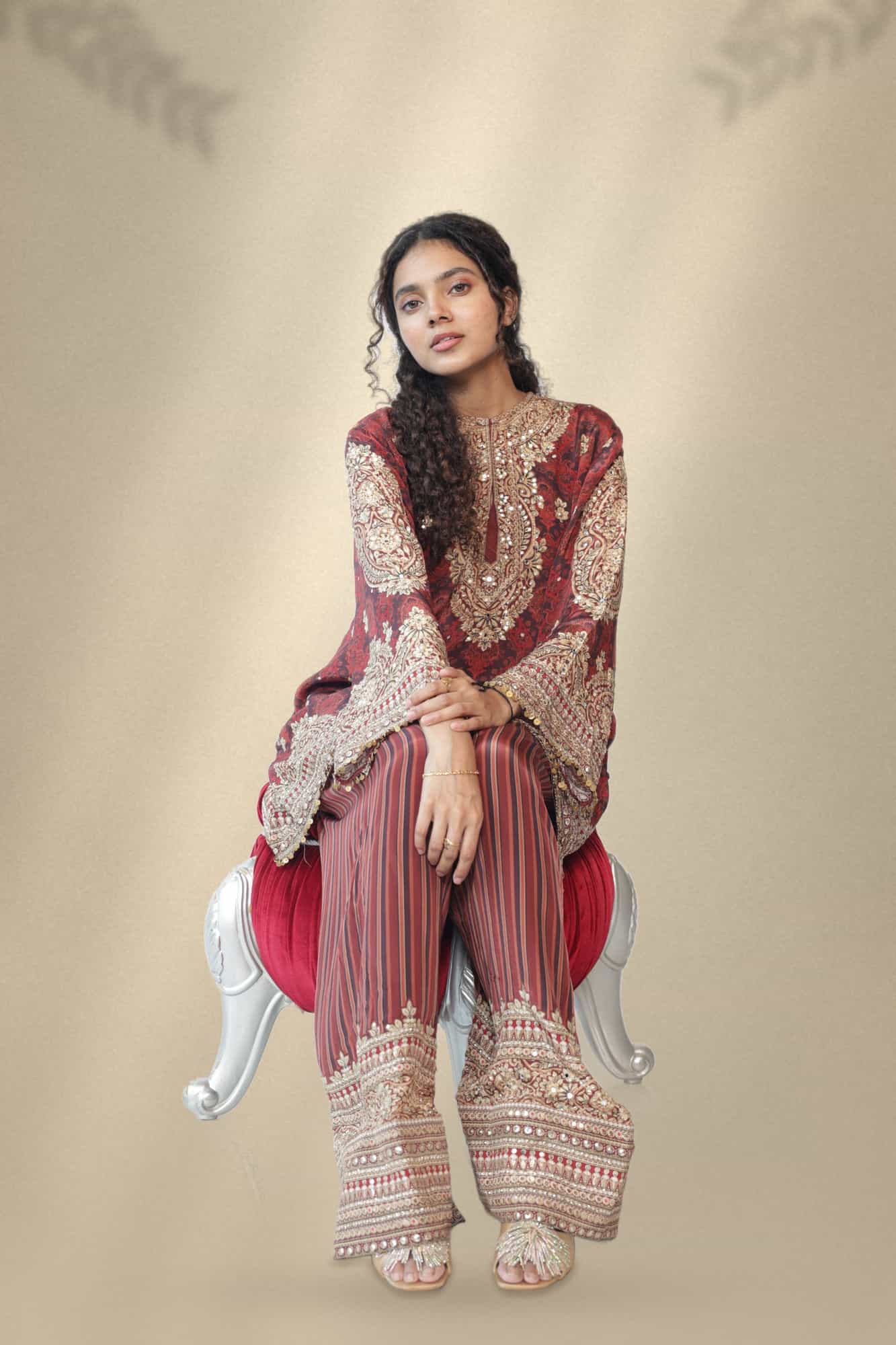
Noor Embroidered Kurta Set
₹18,000
What to wear to each function
- Haldi: something light that you do not mind staining, traditionally yellow. Turmeric paste does not always wash out.
- Mehendi: bright colours and sleeves that push back — see what to wear to a mehendi and a sangeet.
- Sangeet: shine and movement, such as sequins, coin fringe, satin or a sharara.
- Wedding ceremony: rich colours and covered shoulders. At a gurdwara, guests cover their heads, so bring a dupatta.
- Reception: evening glamour, in a gown or a satin set.
Colours to avoid
Red is the bride's colour at most North Indian weddings, so guests tend to avoid an all-red outfit at the ceremony, though red as an accent is fine. Some traditional families also avoid white and black at auspicious ceremonies. Customs vary by community, so if you are unsure, ask the hosts.
A kaftan for a day wedding
For a daytime or outdoor function, a draped kaftan is cooler than anything fitted. The Kiran Aztec Kaftan Set is a black kaftan with a red and cream embroidered bib over palazzos in the matching print, with an asymmetric hem that falls longer at the sides. More draped pieces are under Kaftans.
Ordering in time
In-stock pieces are dispatched within 2 working days, then take 2–5 working days to reach metro cities and 4–9 elsewhere in India. Allow 2 weeks before the first function in a metro city, and 3 elsewhere. Delivery is free on orders over ₹5,000. We do not accept returns or exchanges, and we do not refund an order once it has been dispatched, so check the size guide before you order.